
The Complete History
of F1 Cars
Nine eras. 75 years of engineering evolution. From wire-spoke wheels and supercharged engines to active aerodynamics and sustainable fuel.
Nine Eras of F1 Car Evolution
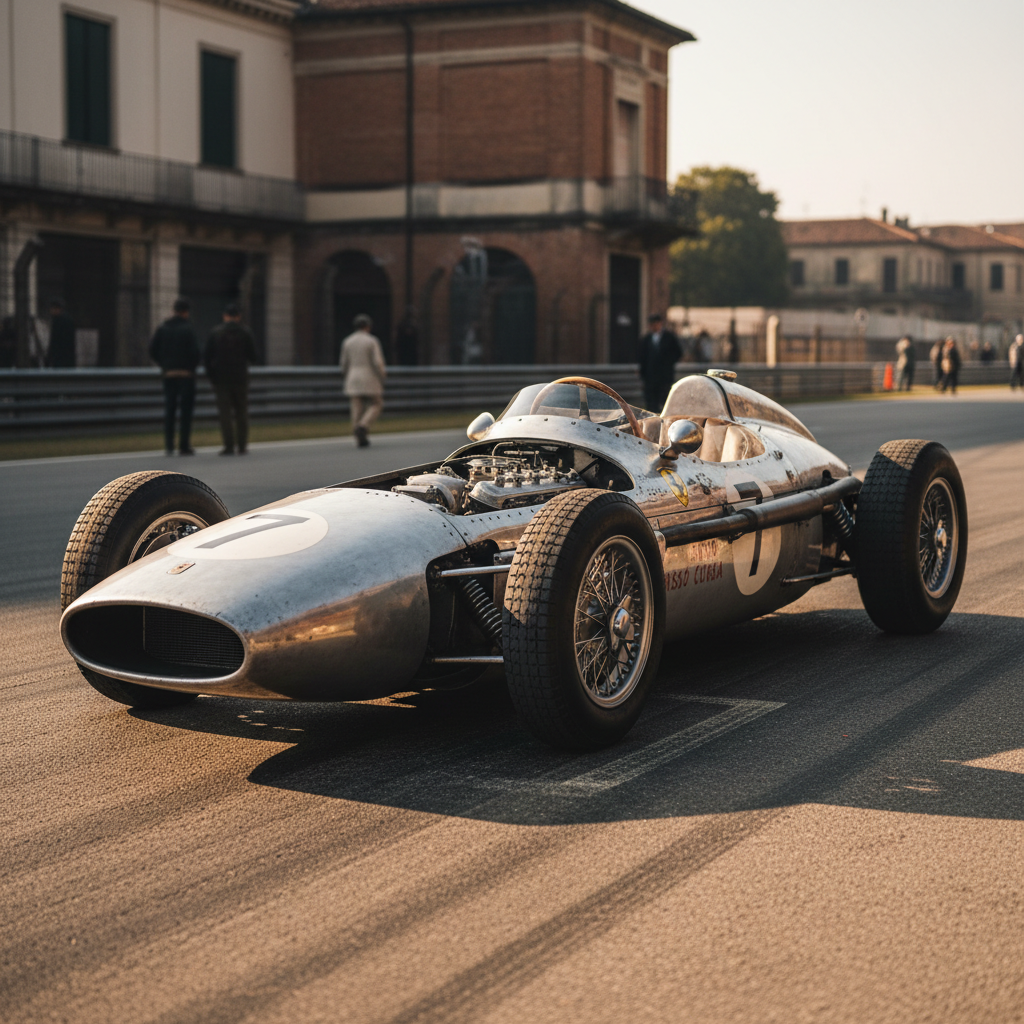
Era 1: Front-Engine Era
The inaugural World Championship era. Supercharged engines up to 1.5L or naturally aspirated 4.5L. No aerodynamic aids. Wire-spoke wheels. Cars were essentially pre-war grand prix machines refined. Giuseppe Farina won the first-ever World Championship race at Silverstone on 13 May 1950 driving an Alfa Romeo 158.
Unsplash — Royalty-free
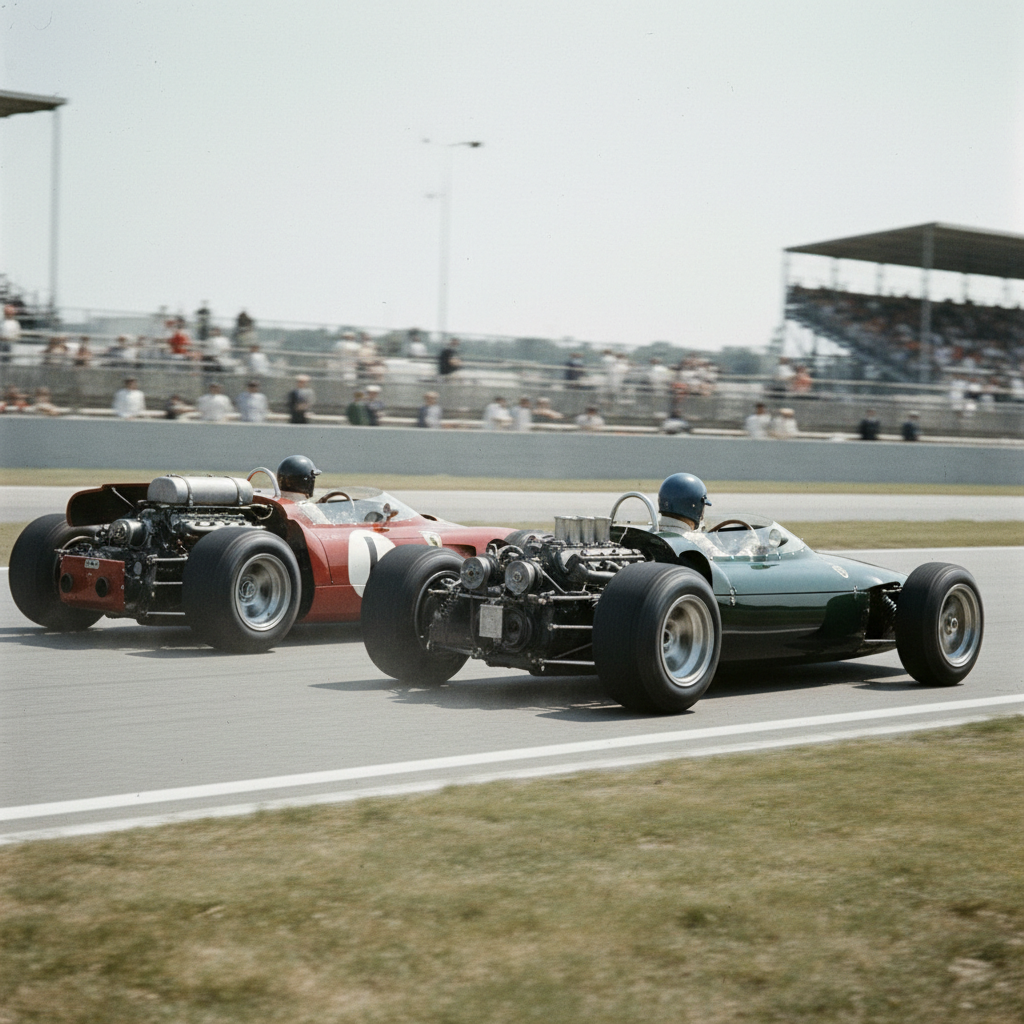
Era 2: Rear-Engine Revolution
Cooper's rear-engine layout, pioneered in the late 1950s, became the universal standard. Engine capacity was capped at 1.5L. The Lotus 25 introduced the first monocoque (single-shell) chassis in 1962, replacing the traditional tubular space frame — a breakthrough that transformed F1 car construction.
Unsplash — Royalty-free
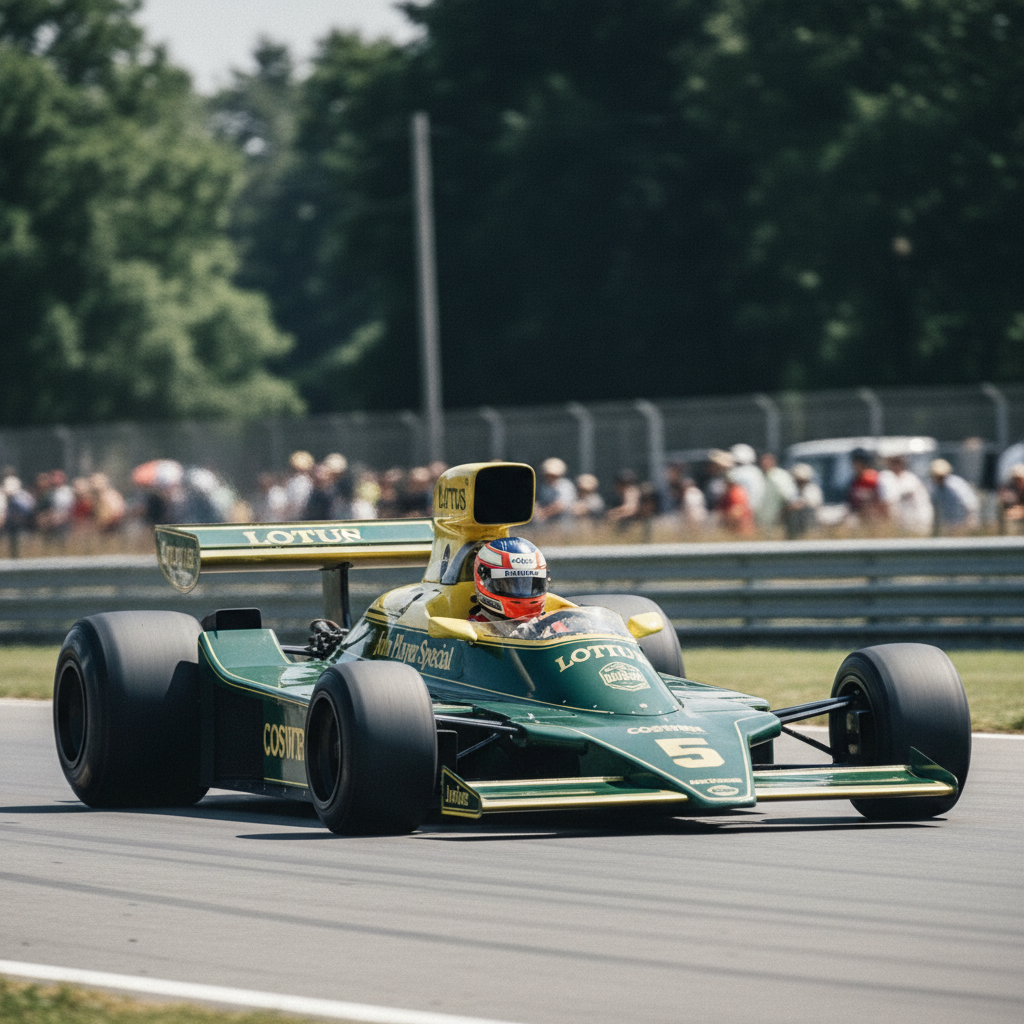
Era 3: 3-Litre Formula & The Wing Era
Engine capacity raised to 3 litres. The Ford Cosworth DFV engine, introduced in 1967, was sold to multiple teams and democratised F1 — allowing smaller teams to compete at the front. Aerodynamic wings appeared in 1968, with teams initially fitting crude high-mounted wings before the FIA regulated them. The era ended with Niki Lauda's near-fatal accident at the 1976 German Grand Prix.
Unsplash — Royalty-free
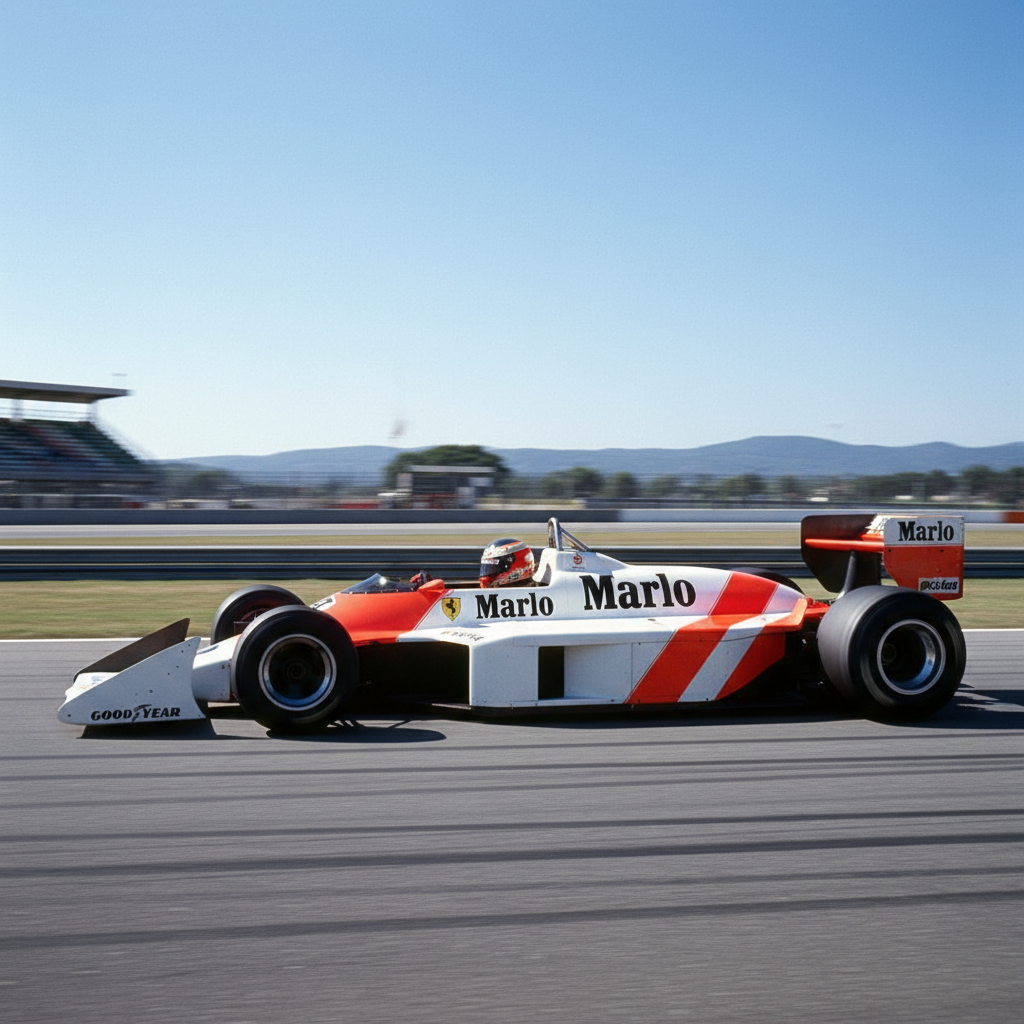
Era 4: Ground Effect & Turbo Wars
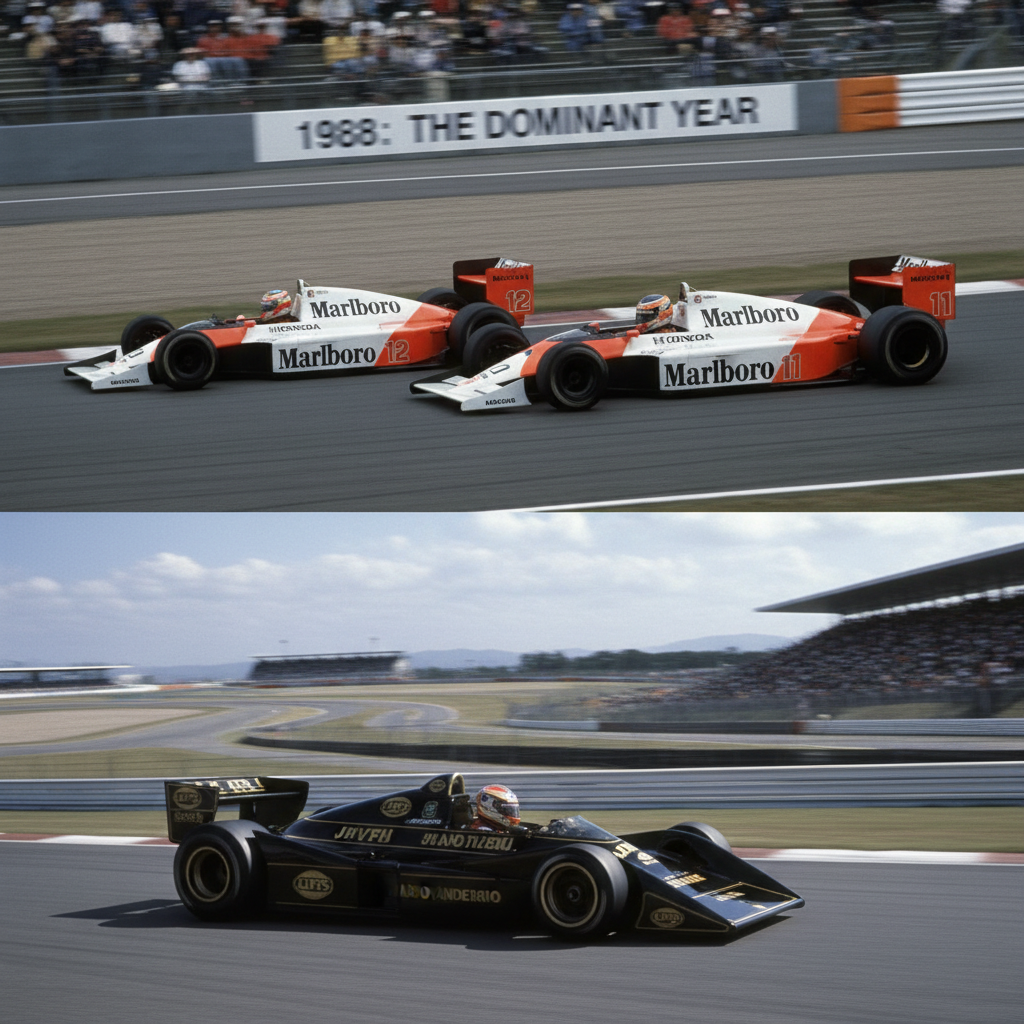
Lotus engineer Peter Wright developed ground-effect aerodynamics in 1977 — Venturi-shaped sidepods that created downforce from the underfloor. Renault introduced turbocharged engines in 1977. By the mid-1980s, qualifying turbos produced over 1,300 HP. The McLaren MP4/4, powered by Honda, won 15 of 16 races in 1988 with Ayrton Senna and Alain Prost — still one of the most dominant seasons in F1 history.
Unsplash — Royalty-free
Era 5: V10 Golden Age
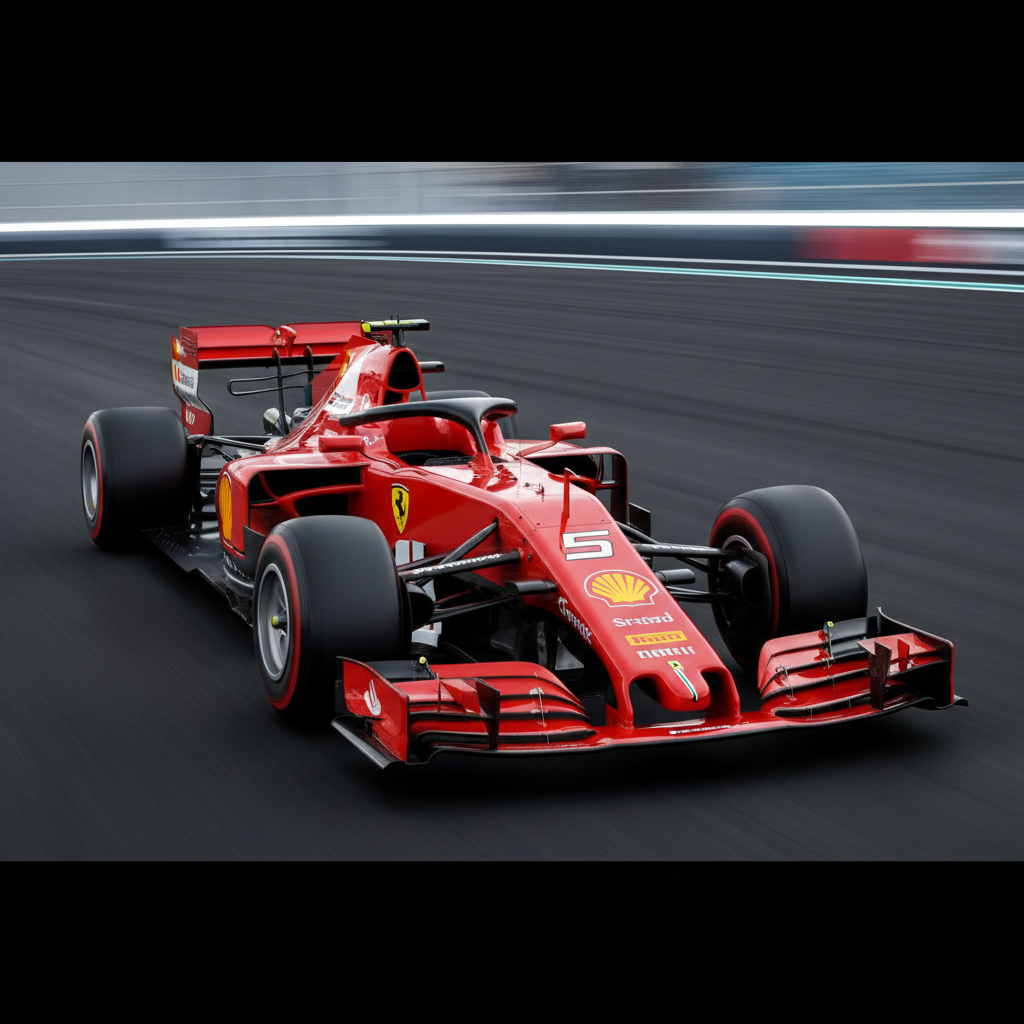
Turbos banned. Naturally aspirated V10 and V12 engines screaming to 20,000 RPM defined this era's sound. Carbon fibre monocoques became standard. The Ferrari F2004, driven by Michael Schumacher, won 15 of 18 races in 2004 and is widely considered the greatest F1 car ever built. Schumacher won five consecutive Drivers' Championships from 2000–2004.
Unsplash — Royalty-free
Era 6: V8 Cost-Control Era
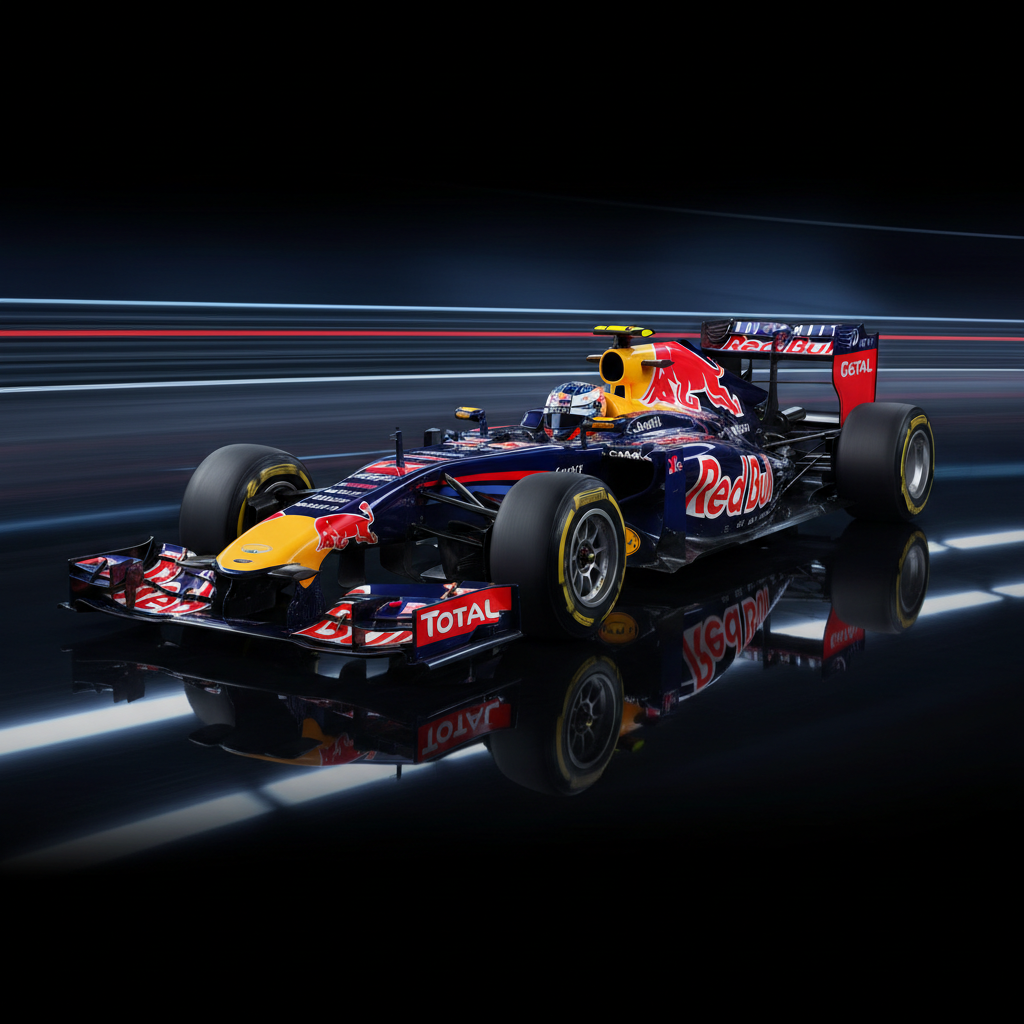
Engines limited to 2.4L V8 at maximum 18,000 RPM to control costs and reduce performance differentials. KERS (Kinetic Energy Recovery System) introduced in 2009 — a preview of the hybrid era. Red Bull Racing, with chief designer Adrian Newey, dominated from 2010–2013 with Sebastian Vettel winning four consecutive Drivers' titles. The Brawn BGP 001 (2009) is one of the most remarkable stories in F1 — a team that nearly folded winning the championship in their first season.
Unsplash — Royalty-free
Era 7: Hybrid Power Revolution
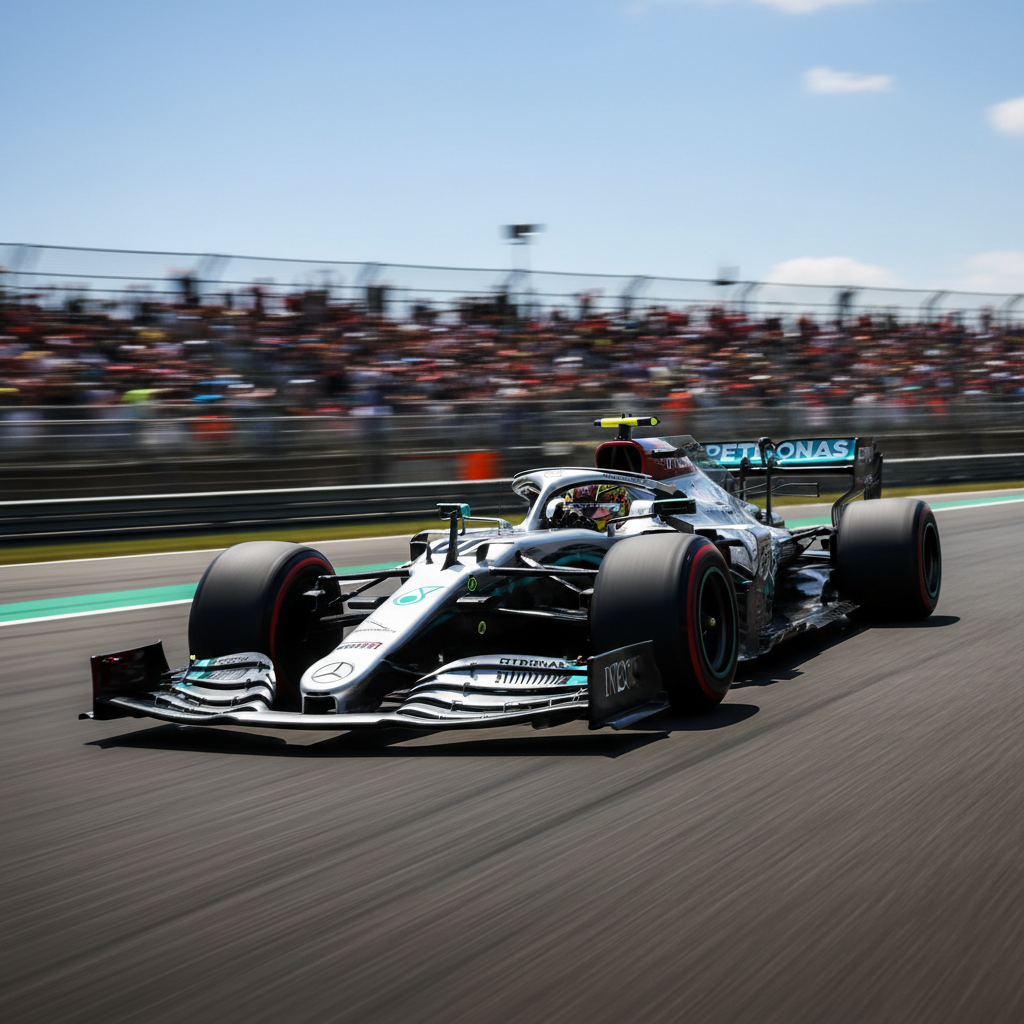
1.6L V6 turbo hybrid power units replaced the V8s — combining the internal combustion engine with two motor generator units (MGU-K and MGU-H) for combined outputs exceeding 1,000 HP at over 50% thermal efficiency. The most thermally efficient internal combustion engine ever made. Mercedes dominated, winning 7 consecutive Constructors' Championships. The Halo cockpit protection device became mandatory in 2018. Max Verstappen won the 2021 title on the final lap of the final race.
Unsplash — Royalty-free
Era 8: Ground Effect Returns
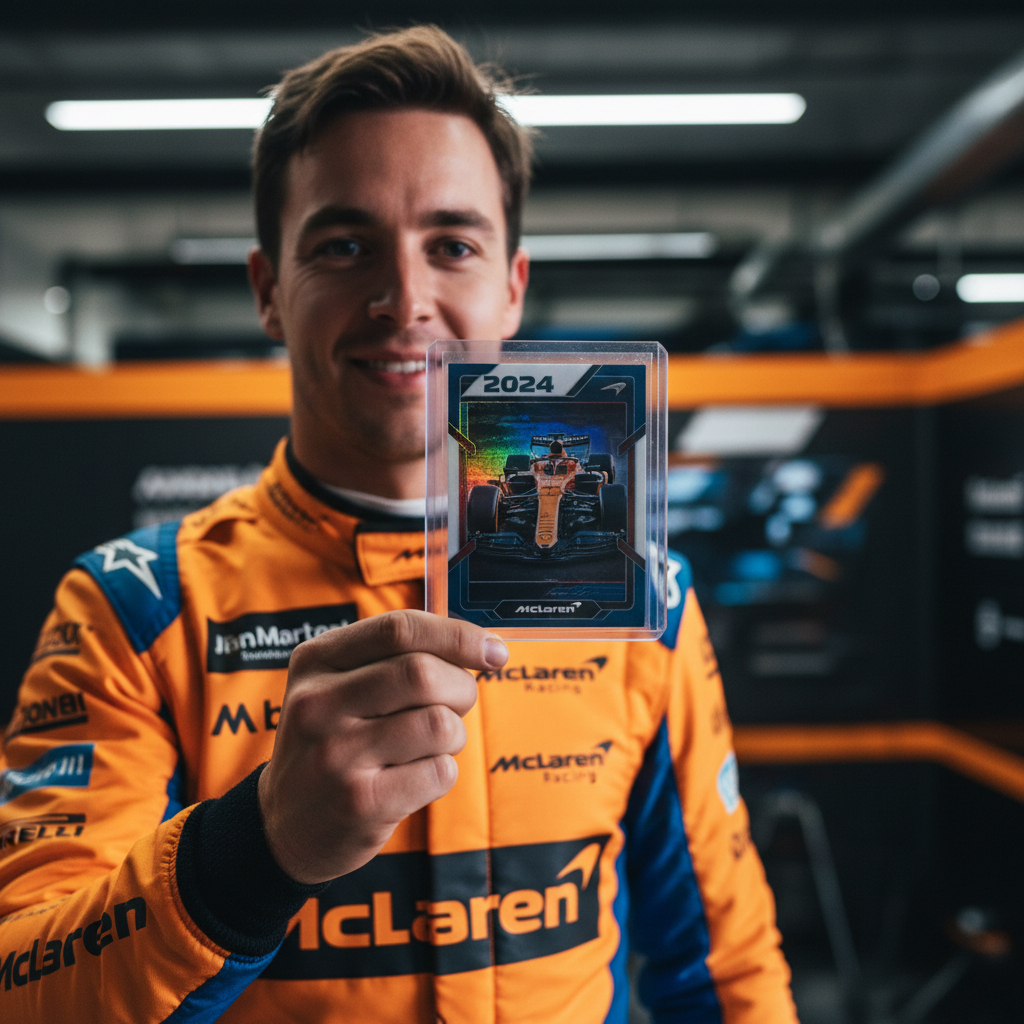
Venturi tunnels reintroduced under completely new ground-effect regulations — 60–65% of downforce now generated by the underfloor. 18-inch Pirelli tyres replaced the 13-inch units. Minimum car weight set at 800 kg. Red Bull dominated 2022–2023. McLaren won the 2024 Constructors' Championship and both the 2025 Constructors' and Drivers' titles, with Lando Norris winning his first Drivers' Championship by just 2 points from Max Verstappen.
Unsplash — Royalty-free
Era 9: Active Aero & Sustainable Future
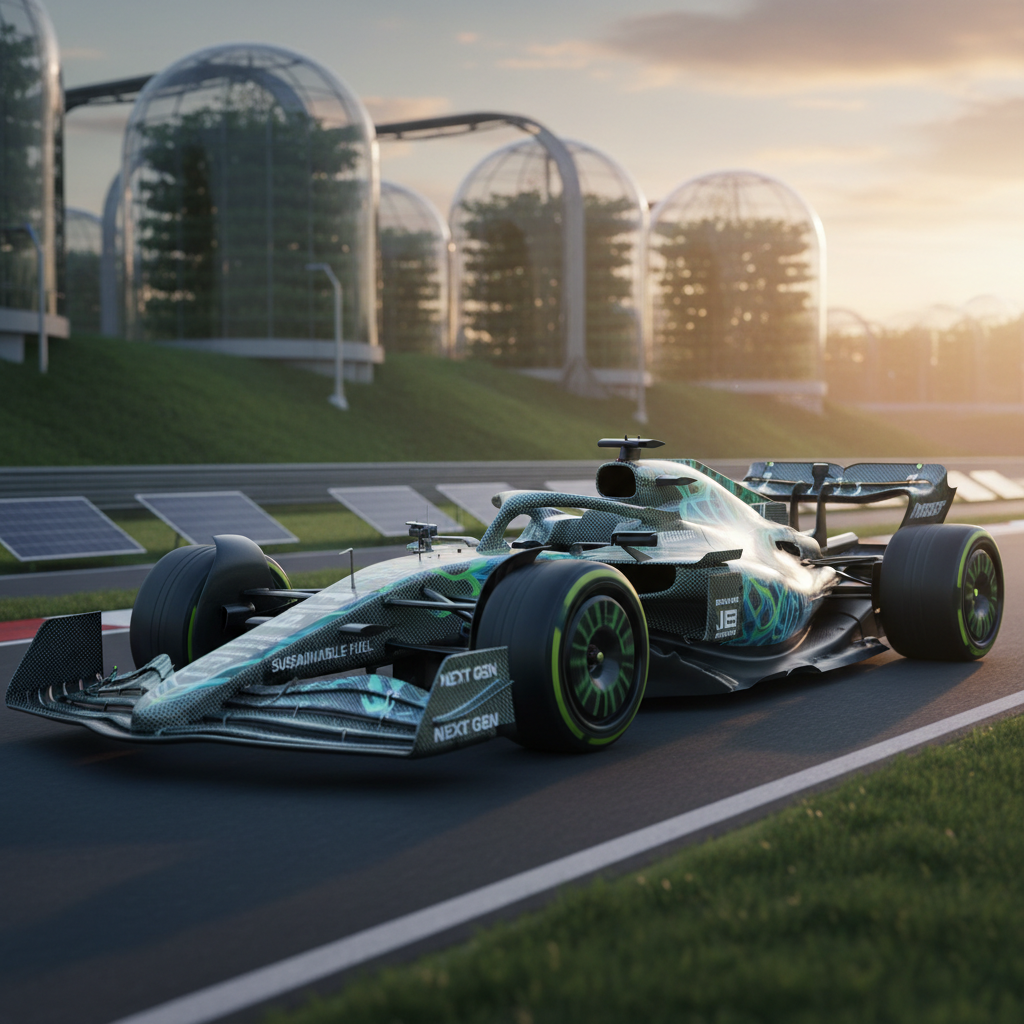
The biggest regulation change in F1 history. DRS replaced by Active Aerodynamics — movable front and rear wing elements that automatically adjust between Z-mode (high downforce, corners) and X-mode (low drag, straights). Near 50/50 ICE-electric power split. MGU-H eliminated — replaced by a more powerful MGU-K delivering 350 kW (up from 120 kW). 100% sustainable fuel. New manufacturers: Audi (as engine supplier), Ford (with Red Bull). Cadillac joins as 11th team. Minimum car weight reduces to 768 kg. Maximum car width reduces by 100mm.
Unsplash — Royalty-free
Dive deeper into specific constructors and their cars