DRS opens the rear wing to reduce drag and add ~15 km/h on straights. Active only within 1 second of the car ahead. Used from 2011 to 2025. Here's how it worked.
DRS — Drag Reduction System — was one of the most talked-about and debated features in Formula 1 from its introduction in 2011 until its final season in 2025. Loved by some for creating overtaking opportunities, criticised by others for making passing too easy and artificial, DRS fundamentally changed the nature of F1 racing for 15 years. This guide explains exactly what DRS was, how it worked, why it was introduced, and why it was ultimately replaced.
What Is DRS? The Simple Explanation
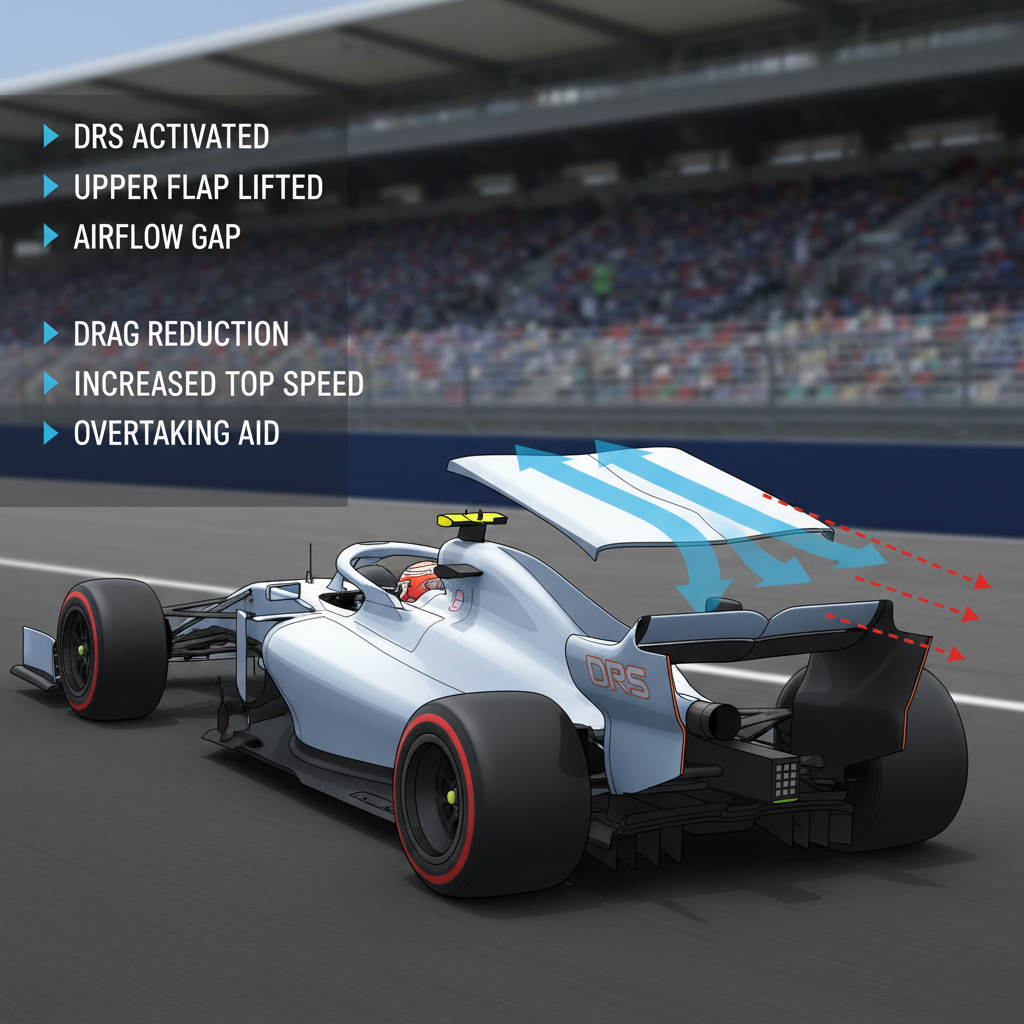
DRS stands for Drag Reduction System. It was a movable element on the rear wing of a Formula 1 car that could be opened to reduce aerodynamic drag on designated straight sections of the circuit. When the DRS flap was open, it reduced the angle of the rear wing's upper element, decreasing drag by approximately 10–15% and adding approximately 10–15 km/h of top speed.
The key restriction was that DRS could only be activated by a driver when they were within one second of the car directly ahead at a designated DRS detection point. This meant DRS was an overtaking aid — it gave the following car a speed advantage on the straight, making it easier to get alongside and pass the car ahead. A driver defending their position could not use DRS in the same zone as the attacking driver.
How Did DRS Work Technically?
The DRS system consisted of a movable flap on the rear wing's upper element, controlled by a hydraulic actuator. When the driver pressed the DRS button on the steering wheel (or in some systems, pulled a paddle), the hydraulic actuator opened the flap, reducing the wing's angle of attack and therefore its drag. When the driver braked for the corner at the end of the straight, the flap automatically closed, restoring full downforce for the corner.
The FIA designated specific DRS zones at each circuit — typically 2–3 zones per track, located on the longest straights. At the beginning of each DRS zone, there was a detection point where the gap between cars was measured. If the following car was within one second of the car ahead at the detection point, the DRS light on the following car's dashboard illuminated, indicating that DRS was available. The driver could then activate it at any point within the DRS zone.
Why Was DRS Introduced in 2011?
DRS was introduced in 2011 in response to a specific problem: the difficulty of overtaking in modern F1. The aerodynamic complexity of F1 cars in the late 2000s meant that a car following closely behind another experienced severe aerodynamic disruption — the "dirty air" effect. The turbulent wake from the leading car reduced the downforce of the following car by up to 50%, making it impossible to follow closely enough to attempt an overtake.
The 2010 season had been particularly processional in terms of overtaking, with many races decided by pit stop strategy rather than on-track passing. The FIA introduced DRS alongside KERS (Kinetic Energy Recovery System) for 2011 to artificially boost overtaking opportunities. The combination of DRS and KERS was intended to create more exciting racing without fundamentally changing the aerodynamic regulations.
The DRS Controversy: Too Artificial?
DRS was controversial from the moment it was introduced. Critics argued that it made overtaking too easy and artificial — that a driver should be able to defend their position using skill, not be helpless against a car with a 15 km/h speed advantage on the straight. Some races saw "DRS trains" where multiple cars could easily pass each other on the straight, leading to a revolving door of positions that lacked the drama of genuine wheel-to-wheel racing.
Supporters argued that DRS was necessary to compensate for the dirty air problem, and that without it, races would be even more processional. They pointed to the increased overtaking statistics as evidence that DRS was achieving its goal. The debate was never fully resolved — DRS remained a feature of F1 for 15 seasons, but was always seen as a temporary fix rather than a permanent solution.
DRS at Different Circuits: Where It Worked and Where It Didn't
The effectiveness of DRS varied enormously by circuit. At Monza — with its long straights and low-downforce setup — DRS was extremely powerful, sometimes making overtaking almost trivially easy. At Monaco — with its narrow streets and no long straights — DRS zones were short and had minimal effect. The FIA adjusted the number and length of DRS zones at each circuit each year to try to find the right balance.
The most effective DRS circuits were those with long straights and heavy braking zones at the end: Monza, Baku, Jeddah, and the Jeddah Corniche Circuit. The least effective were street circuits and technical circuits with few long straights: Monaco, Singapore, and Hungary.
DRS Records and Statistics (2011–2025)
| Statistic | Value |
|---|---|
| Years active | 2011–2025 (15 seasons) |
| DRS zones per race | 2–3 (varied by circuit) |
| Speed advantage | ~10–15 km/h on straights |
| Drag reduction | ~10–15% |
| Activation condition | Within 1 second of car ahead at detection point |
| First race with DRS | 2011 Australian Grand Prix |
| Last race with DRS | 2025 Abu Dhabi Grand Prix |
| Replacement | Active Aero (2026) |
What Replaced DRS? Active Aero in 2026
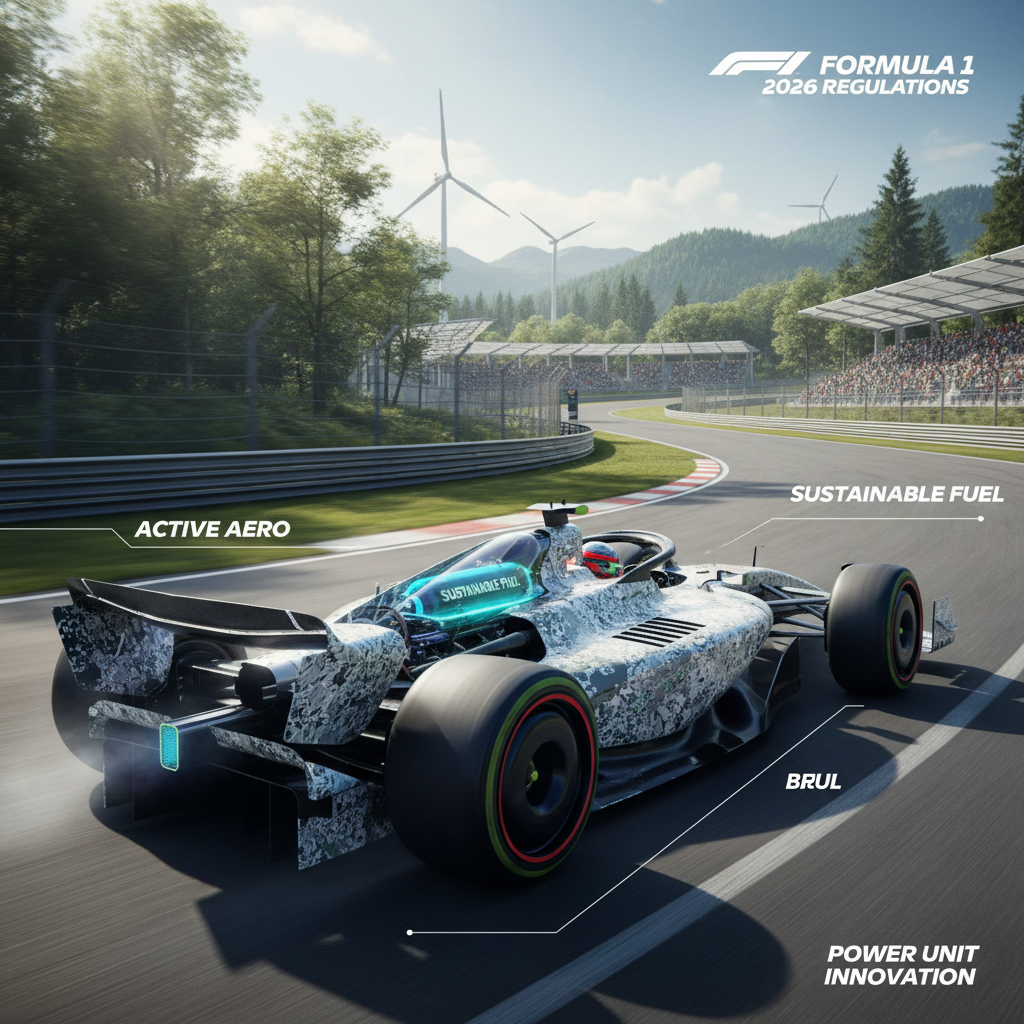
DRS was replaced by Active Aero from the 2026 season. Unlike DRS, which was a manually activated rear wing opening system available only to the following car, Active Aero is an automatic system that adjusts both the front and rear wings based on driving conditions. In corners (Z-mode), the wings generate maximum downforce. On straights (X-mode), the wings reduce drag for maximum speed. Active Aero is available to all cars at all times, not just when within one second of the car ahead.
The 2022 regulations had already partially addressed the dirty air problem by redesigning the aerodynamics to generate more downforce from the floor (ground effect) rather than from wings. This made the cars less sensitive to turbulent air, allowing closer following. Active Aero builds on this by eliminating the need for an artificial overtaking aid altogether.
Related Reading